
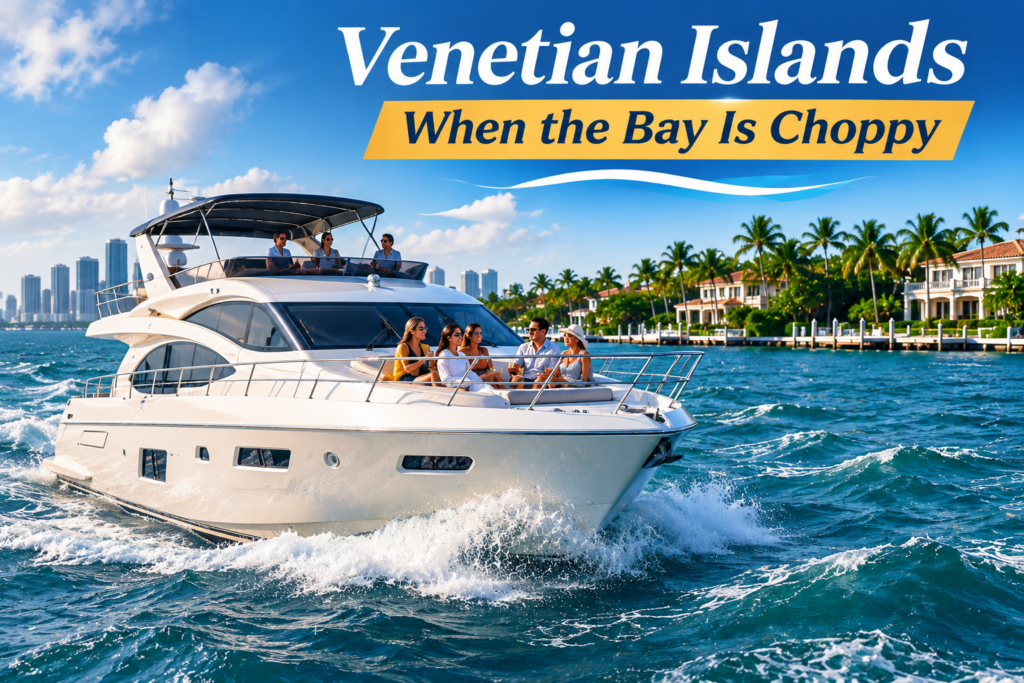
Will the Venetian Islands still be worth visiting if Biscayne Bay looks rough on the morning of your yacht charter? In many cases, yes. A little chop does not necessarily mean your plans need to change. The experience depends on the yacht’s size, current water conditions, and the route your captain chooses.
A 65-foot private yacht offers a different experience from a smaller boat when navigating short waves. However, conditions can still affect how comfortable the ride feels and which activities are possible. Understanding what to expect can help you prepare for the day and enjoy your time on the water.
What Does Choppy Water Really Feel Like?
Choppy water usually means short, closely spaced waves created by wind moving across the bay. Unlike a long ocean swell, these waves can make smaller boats bounce, slap against the water, and move unpredictably.
A 65-foot yacht generally handles moderate chop differently because of its size, weight, and hull design. The movement is often less abrupt than what passengers experience on smaller vessels, although some rolling and pitching should still be expected.
You may notice the movement more when the yacht is stationary, particularly when waves approach from the side. While underway, the captain can adjust the speed and direction to help improve passenger comfort.
It is also worth remembering that a weather forecast does not always reflect the conditions you will experience on board. Wind direction, wave height, and the yacht’s position all influence how the water feels throughout the trip.
How the Venetian Islands Give the Captain More Route Options
The Venetian Islands form a chain across Biscayne Bay, creating different navigation options depending on wind direction and water conditions.
Landmasses can provide some protection from wind-driven waves. Depending on the direction of the wind, one side of the island chain may have calmer water while another remains more exposed.
This gives the captain flexibility when planning the route. The open stretch of the bay might feel relatively choppy, while a more sheltered area near the islands could offer a smoother ride.
However, conditions can change throughout the day. A route that feels comfortable in the morning may become less suitable if the wind shifts or the water becomes rougher.
That is why the captain evaluates the conditions on the day of your charter rather than relying entirely on a route planned weeks in advance.
What the Captain Decides and What You Can Control
The captain is responsible for all decisions involving navigation and passenger safety. This includes choosing the route, adjusting speed, deciding whether to anchor, and determining whether swimming or other water activities are appropriate.
These decisions may change during the charter if wind or water conditions shift.
One important consideration is anchoring. A yacht that feels relatively stable while moving can experience more noticeable movement when stationary, especially when waves approach from the side. Depending on the conditions, the captain may recommend continuing the cruise or moving to a more sheltered location.
As a guest, you can help shape the experience by communicating what your group wants from the day.
If everyone prefers relaxing on deck, enjoying music, and spending time together, a little movement may not affect the overall experience. If swimming, floating, or enjoying a quiet afternoon on the water is the priority, let the crew know before departure.
This gives the captain a better understanding of your preferences when considering the available route options.
How to Prepare for a Yacht Charter on a Choppy Day
A little preparation can make a noticeable difference when spending several hours on the water.
Here are a few practical ways to stay comfortable:
-
Eat before boarding: Have a light meal before departure. Boarding on an empty stomach or eating too much immediately beforehand may increase discomfort.
-
Prepare for motion sickness: If someone in your group is prone to seasickness, they should consider their usual preventative remedy before departure, following the product instructions or medical advice.
-
Wear suitable footwear: Choose flat shoes with good grip, or go barefoot where the crew permits it. Avoid heels and slippery footwear on wet decks.
-
Choose a comfortable seating position: Sitting low and closer to the center of the yacht can help reduce the sensation of movement.
-
Secure personal belongings: Keep phones, sunglasses, drinks, and other loose items in appropriate holders or storage areas.
-
Look toward the horizon: Focusing on a stable point in the distance rather than looking down at your phone may help reduce motion discomfort.
If anyone has mobility concerns, a history of severe motion sickness, or is travelling with very young children, inform the crew before departure. This allows them to discuss suitable seating arrangements and any additional precautions.
Sunset Cruises and Swimming Plans When the Bay Is Rough
The time of your charter can influence the experience, particularly when wind and water conditions change throughout the day.
A sunset cruise from Miami Beach is worth considering if your group prefers an evening outing. The changing light creates beautiful views of the Miami skyline and waterfront properties.
However, evening departures do not guarantee calmer water. Wind conditions can improve or worsen at different times, so the captain will still assess the situation before departure.
Swimming stops are another activity that may be affected by choppy conditions.
If your group is planning a sandbar boat trip, the captain will need to identify an area where guests can safely enter and exit the water.
Depending on the conditions, the crew may recommend a shorter swimming session, move to a more sheltered location, or skip the stop altogether. These adjustments help maintain passenger safety without necessarily ending the rest of the charter.
What Changes During Rough Conditions and What Stays the Same?
A choppy day may require changes to the itinerary, but it does not automatically mean your private yacht experience has to be cancelled.
Depending on the conditions, the captain may:
-
Choose a more sheltered route around the Venetian Islands.
-
Adjust the yacht’s speed to improve passenger comfort.
-
Change the planned anchoring location.
-
Delay departure if conditions are expected to improve.
-
Replace a swimming stop with additional cruising time.
What remains unchanged is the private nature of your charter. Your group still has the yacht, captain, and crew to yourselves. You can enjoy the onboard seating, music, and available amenities while the captain manages the route.
Passenger safety always comes first. If the weather or water conditions become unsuitable, the captain has the final say on whether the charter can proceed.
Before booking, review the weather and cancellation policy to understand the available options if your trip is affected by weather.
How to Decide on the Morning of Your Charter
If the forecast shows strong winds or rough water, avoid making a cancellation decision based on the app alone.
Instead, contact the charter team on the morning of your reservation and ask for an update from the captain. Someone who has assessed the actual conditions at the dock can provide more useful guidance than a general forecast.
If members of your group are concerned, discuss which parts of the itinerary can be adjusted. You may be able to proceed with a different route, move the departure time, or focus on activities that are more suitable for the conditions.
If you are booking in advance, flexibility is helpful. Allowing some room around your preferred departure time and keeping your itinerary adaptable can make the experience less stressful.
It is also a good idea to discuss expectations with your guests beforehand. A group that understands the possibility of route changes is generally better prepared to enjoy the day, even when the weather is not perfect.
Conclusion: Enjoy the Venetian Islands with the Right Plan
A choppy bay does not automatically mean you need to give up your Venetian Islands yacht charter. A 65-foot yacht can provide a more comfortable experience than a smaller vessel in moderate chop, but the actual conditions will determine the safest and most suitable itinerary.
Choose a departure time with some flexibility, prepare for possible motion, and let the crew know what your group wants from the experience.
On the morning of your charter, contact the team for an update and follow the captain’s recommendations. With a flexible itinerary and realistic expectations, you can still enjoy a memorable day on the water.
Ready to plan your private yacht charter?
Call (786) 839-6753 or visit 1508 Bay Rd, Miami Beach, FL 33139. Let the team know your preferred date, group size, and the kind of experience you have in mind.
Frequently Asked Questions
Is it safe to go out when the bay is choppy?
Chop on its own is normal for the bay, and the yacht is built for it. The captain watches conditions all day and will change the route or call off the trip if it stops being safe. Your job is to follow crew instructions and keep your footing.
Will I get seasick on a 65-ft yacht?
Some people do, most do not. A heavier boat moves slower than a small one, and sitting low and central helps. Take your usual remedy before departure, eat lightly, and look at the horizon.
Can we still swim if the water is rough?
Sometimes. The captain decides whether the water is calm enough for getting in and out safely. If it is not, the stop may be shortened or moved to a more protected spot, and the rest of the day carries on.
What if the weather forces a cancellation?
The captain makes that call for safety. What happens next is set out on the weather and cancellation policy page, so read it before you pay.
Does a rough day change who is on the boat?
No. The charter stays private to your group, up to thirteen guests, with the captain and crew running the day.