
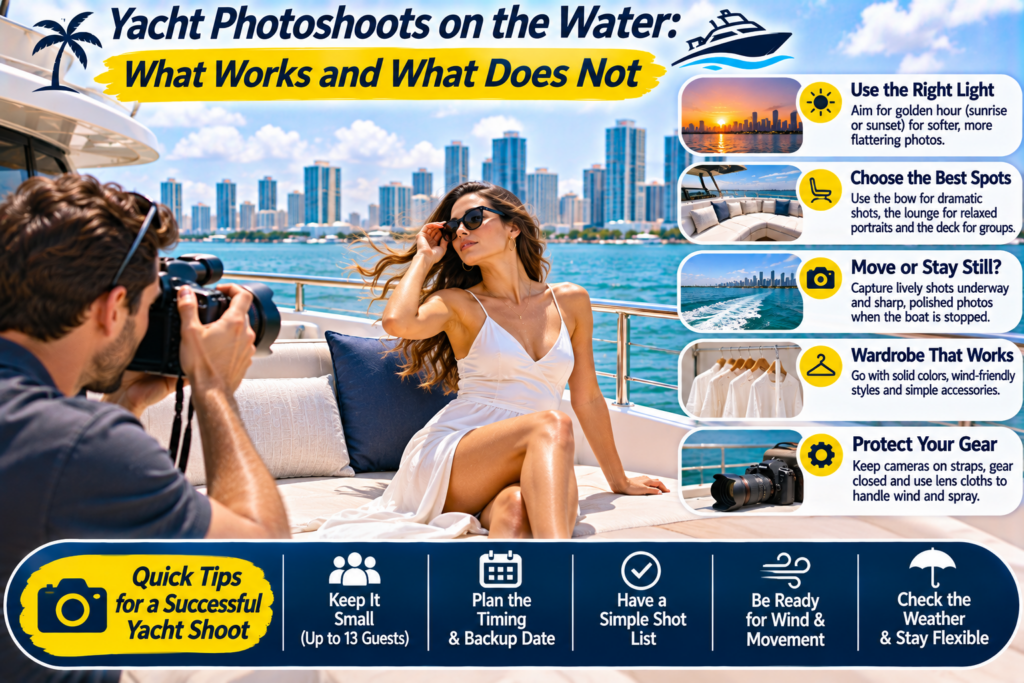
Can you get sharp, good-looking photos on a moving boat, or does the water ruin the shoot? You can, but the water changes the rules. Light, motion and wind decide most of the result, and the people who plan around those three are the ones who come home with images worth using.
Start with the light
Midday sun is the hardest light to work with on open water. It bounces off the surface, flattens faces and leaves everyone squinting. Night shots with the skyline lit up look striking, but they are the hardest to do well without proper lighting, so decide early whether you want them.
Put the sun to the side of your subject or behind them, not behind the photographer. Then ask the captain to turn the boat so the light falls where you want it. The captain controls the angle of the whole deck, and that one request can change every frame.
Decide when the boat moves and when it stops
The biggest choice is whether you shoot underway or stopped. Underway gives you wind in the hair, spray, wake and energy, and it is great for short clips and loose lifestyle frames. It also gives you camera shake, a tilting horizon and clothing that has a mind of its own.
Stopped water is steadier. Portraits, group shots and anything that needs sharp detail are far easier when the boat is holding position. Plan the day in two parts, moving shots first while everyone is fresh and still shots when the light is at its best, and tell the captain which part is which.
Pick your spots on the deck
The yacht has open-air decks, lounge seating and a bow sun pad, and each one photographs differently. The bow gives you open water ahead and the skyline behind, which suits wide, dramatic frames. The lounge seating suits relaxed, seated portraits where nobody has to balance. The open deck suits groups and movement.
Walk the boat before the shoot starts and choose three spots, one for each kind of shot. Stay clear of the rail. Anyone posing near an edge should have a steady footing and a clear head, not a camera in one hand and a drink in the other.
What tends to work
Simple, solid colors that stand out against blue water and white decks. Fabrics that hold their shape in a breeze. Hair that is tied back or styled to survive wind. Soft-soled shoes for movement, and bare feet when the shot calls for them. A short, written short list that everyone has seen. A small team that knows its jobs.
Seated poses work better than standing ones when the boat is moving, and they make nervous subjects look more natural. Candid frames, taken while people are laughing or looking at the view, beat stiff poses almost every time.
What tends to fall flat
Long, flowing fabric looks beautiful in a still frame and turns into a battle once the wind picks up. Hats, scarves and sunglasses leave the deck in a second, so tie them down or leave them off. Delicate jewelry and loose small props are easy to lose over the side.
Too many outfit changes eat into the light and the patience of everyone aboard, so keep them to a minimum. A tight schedule with every minute planned also backfires, because the light and the water will not follow your timetable. Leave slack.
Protect the gear
Salt spray and wind are hard on equipment. Keep cameras on straps, keep bags low and closed when not in use, and carry lens cloths, because spray lands on glass constantly. Tripods and stands do not like a moving deck, so plan to hand-hold underway and set up only when the boat is holding still. If you plan to fly a drone, ask us before the day, not on it.
Keep the group small and the roles clear
The yacht takes up to thirteen guests, and anyone aboard who is not crew counts toward that limit. Count your photographer, stylist and everyone in front of the camera, then keep the full group at thirteen or fewer. A smaller team is usually better anyway, because a crowded deck means people in the background of every frame.
Give each person one job. One person directs, one person watches the light, and one person keeps an eye on belongings. If the shoot is for a brand or for social content, plan the clips and the stills separately so you are not switching between formats mid-moment.
Plan for the weather
Miami showers pass quickly, and clouds can actually soften the light, but a cancelled charter is still a lost day. If we cancel for weather, you can reschedule to another date, so build a backup day into your plan and tell your team and any models before the first date, not after.
Frequently Asked Questions
Can I bring my own photographer or videographer?
Tell us before you book so we can confirm the details. Anyone aboard who is not crew counts toward the limit of thirteen guests, so include them in your headcount.
Can photography be arranged for us?
Photography arrangements are available as an add-on. Tell us what kind of shoot you have in mind and we will say what fits.
What is the best time of day for photos on the water?
Late afternoon into sunset is the most flattering for portraits. Midday brings harsh light and glare, so plan simpler shots for that window or skip it.
Can the boat stop for the shots?
Tell us you want steady stops for portraits and group frames, and we will plan them with the captain beforehand. Moving shots and still shots work best planned as separate parts of the day.
What if the weather turns?
If we cancel for weather, you can reschedule to another date. Read the weather and cancellation policy before you set your shoot day, so you know the terms.